


Hey there! I'm a supplier of knitted throws, and I know how frustrating it can be when your beautiful knitted throw starts to stretch out. I've seen this issue a lot in the business, and I'm here to share some tips on how you can keep your knitted throw in top - notch shape.
First off, let's talk about the materials. Different yarns have different properties, and some are more prone to stretching than others. For instance, natural fibers like wool are great for warmth and softness, but they can stretch easily, especially when wet. On the other hand, synthetic fibers such as acrylic are more resistant to stretching. When you're buying a knitted throw, check the label to see what kind of yarn it's made from.
We have some amazing options in our collection. The Jacquard Diamond Pattern Knit Throw Blanket is a real stunner. It's made with a blend of high - quality yarns that are carefully chosen to balance softness and durability. The diamond pattern not only looks great but also adds a bit of structure to the throw, which helps in reducing stretching.
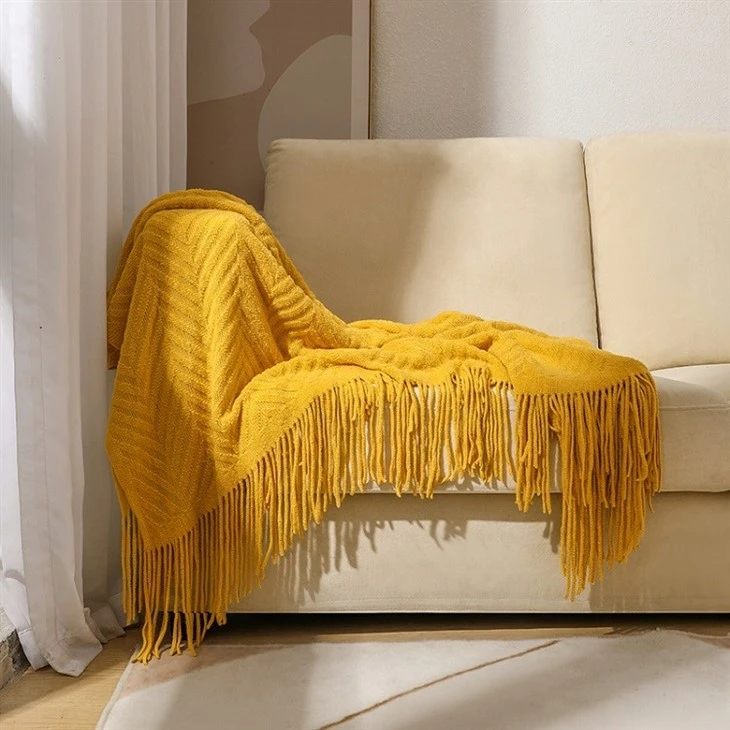
Another one is the Yellow Knitted Herringbone Throw Blanket. The herringbone pattern is not just for aesthetics; it gives the throw more stability. The yellow color is so vibrant and can brighten up any room. And the yarn used in this throw is selected to resist stretching, so you can enjoy it for a long time.
Now, let's get into some practical tips on how to prevent stretching.
Proper Handling
When you're using your knitted throw, be gentle with it. Don't tug or pull on it too hard. For example, if you're spreading it on a couch, lay it out smoothly instead of yanking it across the cushions. Avoid hanging the throw by one corner or a small section, as this can cause the yarn to stretch unevenly. If you need to move it from one place to another, fold it neatly and carry it carefully.
Washing and Drying
Washing is a crucial part of maintaining your knitted throw. First, always follow the care instructions on the label. If it says to hand - wash, don't throw it in the washing machine. Hand - washing is often the best way to go for knitted throws, as it's more gentle. Use lukewarm water and a mild detergent specifically designed for delicate fabrics. Gently swish the throw in the water, being careful not to agitate it too much.
When it comes to drying, never wring out the throw. This can cause the yarn to stretch and distort. Instead, gently press out the excess water with a clean towel. Then, lay the throw flat on a dry towel or a drying rack. Make sure to reshape it to its original size and shape while it's wet. If you let it dry in a wrinkled or stretched - out state, it will likely stay that way.

If you prefer using a dryer, choose a low - heat or delicate cycle. High heat can damage the yarn and make it more likely to stretch. You can also put a few clean tennis balls in the dryer with the throw. The balls will help fluff up the yarn and prevent it from clumping together, which can contribute to stretching.
Storage
Proper storage is also key to keeping your knitted throw from stretching. When you're not using it, fold it neatly and store it in a cool, dry place. Avoid storing it in a tight space where it can be compressed for long periods. You can use a storage bin or a fabric bag to keep it protected. If you have multiple throws, stack them carefully so that they don't get pulled or stretched out of shape.
The Herringbone Jacquard Knit Throw Blanket is a great example of a throw that can be stored easily. Its well - structured pattern holds up well during storage, and with the right care, it will look as good as new when you take it out again.
Blocking
Blocking is a technique that can be used to reshape a knitted throw and prevent stretching. It involves wetting the throw and then pinning it to a flat surface in the desired shape. You can use T - pins or blocking wires to hold the throw in place. Let it dry completely before removing the pins. This method helps to set the yarn in its proper shape and can correct any minor stretching that may have occurred.
Regular Inspection
Make it a habit to check your knitted throw regularly. Look for any signs of stretching, loose threads, or damage. If you notice a small area starting to stretch, you can try to gently reshape it while the throw is damp. Catching these issues early can prevent them from getting worse.
In conclusion, keeping your knitted throw from stretching requires a combination of proper handling, washing, drying, storage, and a bit of maintenance. By following these tips, you can ensure that your knitted throw stays beautiful and in great condition for years to come.
If you're interested in adding some high - quality knitted throws to your collection or are a retailer looking to stock up, I'd love to have a chat with you. Reach out to me, and we can discuss your needs and preferences. Whether you're looking for a specific color, pattern, or material, I'm here to help you find the perfect knitted throws.
References
- Knitting and Crochet Guild Handbook on Textile Care
- Textile Science for Beginners textbook