


Quilts & Bedspreads
Shanghai Smike International Trading Co. Ltd. was established in 2010, located in Shanghai, China. Specialized in exporting of quilts, bedspreads, duvet covers, sheet sets, comforter sets, blankets, toys, etc. We have rich experience in home textiles. We have many customers from wholesalers to retailers all over the world, such as Dolz, JHL, MH, Luhta, and Babyelegance.
When stepping into home textiles, SMIKE is devoted to building the integrated service from development, and production to after-sale service. We could customize according to every different requirement and develop new products with our professional design team.
SMIKE enjoys a good reputation in the world of our competitive price, perfect after-sale service, and strict QC quality control systems. We have joined some exhibitions like Frankfurt Fair, Canton Fair, East China Fair In Shanghai, and many other fairs all over the world to receive new and old customers. We are acquainted with the market and pay close attention to the tendency of fashion. Our management idea is " WIN-WIN COOPERATION".If we are lucky to have the opportunity to cooperate with you, we believe Smike will be in your good partner list.
Why choose us?
Rich experience
We have an embroidery pattern and printing pattern design team with more than 10 years of design research on home textiles. Our designs are recognized by customers from various countries.
Professional solution
With rich experience and one-to-one service, we can help you choose products and answer technical questions.
Quality control
Our quality inspection team has established a strict quality control system to conduct comprehensive inspections of products, discover and solve problems promptly, and ensure the quality of products or services.
Global shipping
We have a very professional and stable transportation team that can quickly arrange delivery and transportation, so that you can receive the goods you ordered as quickly as possible. Can reduce your time cost.


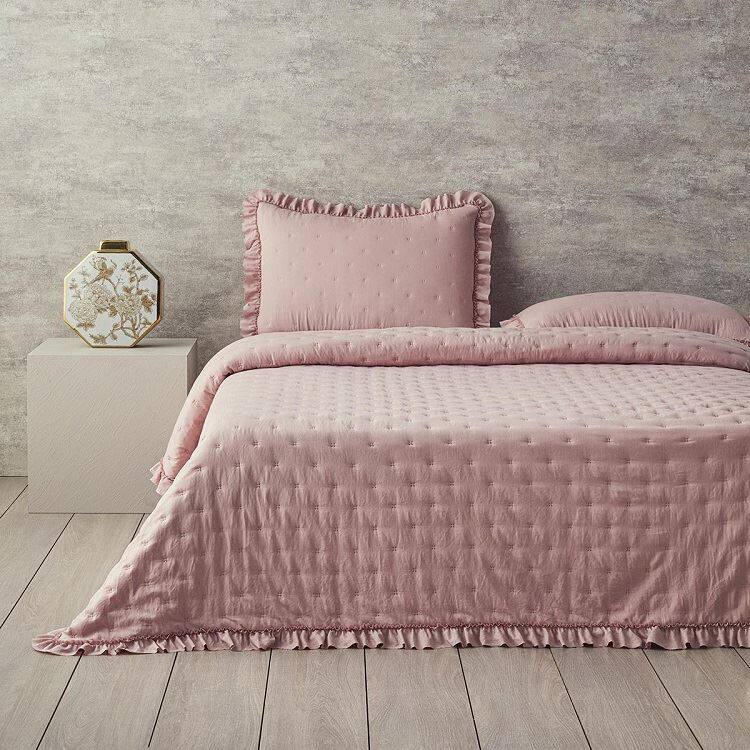
A quilt is basically composed of a quilt top, a layer of batting or wadding and a quilt back. These layers are held together by stitching the 3 layers together, known as quilting. There are many styles of quilts that fall into categories such as Traditional, Contemporary, Abstract, Art, Modern, Photo Quilts, Fast and Easy. The history of quilts, as a practical technique to provide insulation and protection, can found in ancient Egypt in the Temple of Osiris, as shown by detailed drawings. One of the earliest decorative quilts was from the 14th Century, the Tristan Quilt made in Sicily. Quilts, as we think of them now, function as a way to stay warm as well as an Artistic expression.
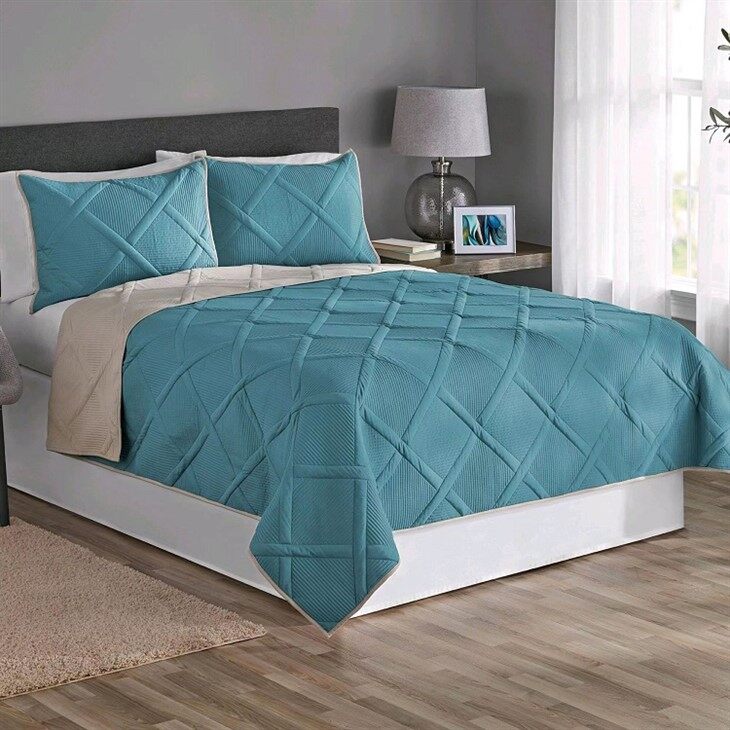
Bedspreads are a type of bed cover. They’re lightweight and can serve as a standalone bedding option during warmer summer months or as an additional layer to a comforter during colder weather.
Benefits of Quilts & Bedspreads
Simple
A simple coverlet is a versatile piece that can be used in many different ways. It can be quilted or woven, depending on what you want to achieve. A simple coverlet can also be a great way to make your bed look more stylish. A woven coverlet is one of the most popular types of coverlets.
A coverlet is an excellent option to use as a base for your bed because of its lightweight design. It is also versatile and can be layered over a traditional throw blanket or a bedspread. This way, you can change up the look of the coverlet without having to buy a bed skirt or a comforter separately.
Reversible
If you want your bedroom to look more polished, you should consider investing in a reversible coverlet. These stylish bedding pieces feature elegant floral designs in a neutral color scheme. Reversible coverlets can add a chic look to any bedroom, as well as double decorative pillowcases of standard sizes. These covers come in queen, king, and twin sizes and are available in a variety of fabrics and colors.
Lightweight
When buying a Lightweight Coverlet, it is essential to consider your needs and preferences. There are many different types available, and each can offer different benefits. The right product depends on your preferences and the activity you’ll be performing with it. Also, consider your budget when deciding on the best product for you.
A lightweight coverlet is great for the summer months and can be used as a layering layer during cooler months. If you want a more substantial cover during the colder months, you might consider buying a full-size coverlet in a solid color. This is an economical option that is both comfortable and functional.
A coverlet is a single-sided blanket that is generally lightweight and made of woven or quilted material. It is usually folded at the foot of the bed and lies underneath the duvet. Coverlets can be machine-washed and tumble-dried to prevent wrinkling.
Easy to care for
A coverlet is one of the easiest forms of bedding to care for. These lightweight pieces are made with no middle layer, making them easier to keep clean. They can also be machine-washed. A quilt, on the other hand, is best washed by hand. The main function of a quilt is to provide warmth, and a coverlet can provide this functionality without the added weight.
Thermal regulation
Quilts provide optimal thermal regulation, keeping you comfortably warm without overheating. The layers of fabric, especially when made from breathable materials like cotton, help maintain a consistent and comfortable body temperature throughout the night. This ensures that you aren’t too hot or too cold, promoting uninterrupted sleep.
Comfort and security
The weight and snugness of a quilt can evoke a sense of comfort and security. Weighted quilts, in particular, create a gentle, embracing pressure, similar to a hug, which has been associated with reduced anxiety and better relaxation. This calming effect can contribute to falling asleep faster and experiencing deeper, more restful sleep.
Reducing environmental disturbances
Quilts act as a barrier against environmental disturbances. The added layers can help muffle sounds and block out light, creating a conducive sleep environment. This is especially beneficial for individuals sensitive to noise and light disruptions, allowing for an undisrupted and more restorative sleep experience.
Types of Quilts & Bedspreads

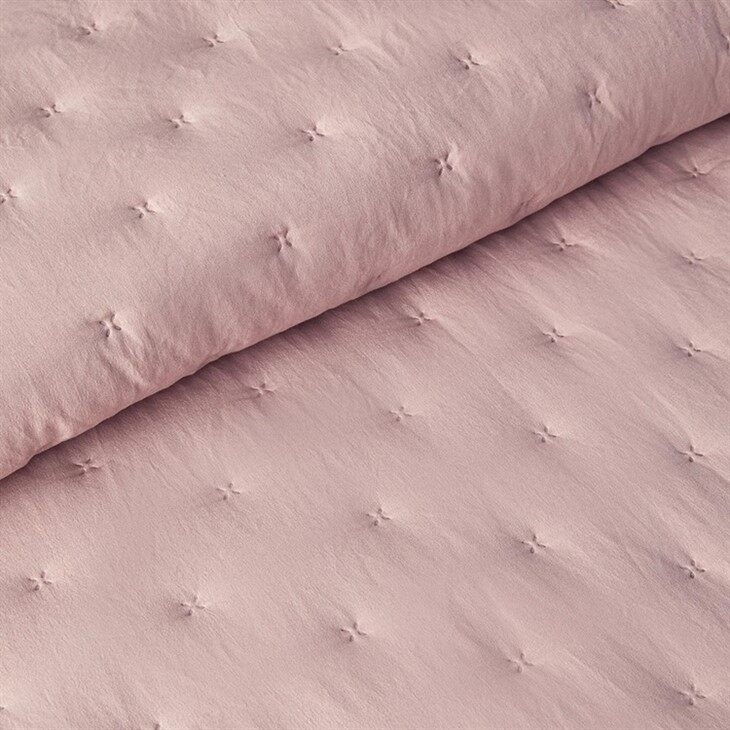
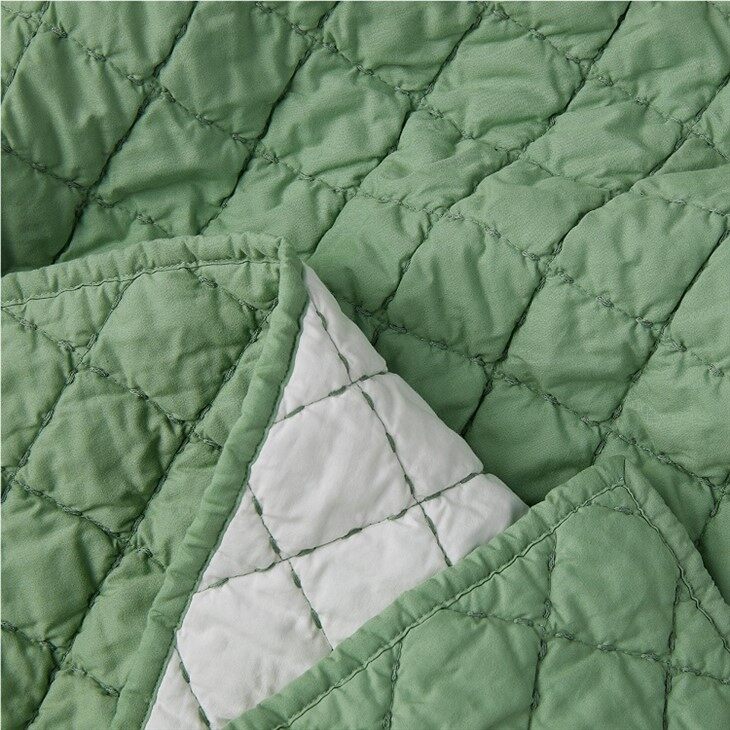

Pieced or patchwork quilt
This basic form of quilting is created by sewing together contrasting pieces of fabric, usually to form a block. In the past, resourceful quilters would recycle old clothes and scraps into incredible designs. Today, one of the great joys is in choosing new fabrics and color palettes, or recycled materials that have meaning to us. You can use any kind of construction, and any shape is fair game—strips, triangles, squares, tetradecagons (that’s 14 sides). This is how quilting originated, and it’s the perfect style for beginners to try. You can plan a themed quilt or wing it. As long as it’s made with love, it’ll come out beautifully.
Appliqué quilt
When you cut out shapes from different fabrics and apply them to the top of your quilt, you can create a design or map out an entire scene that tells a story. It’s an artful way to free-hand your quilt, and you can either stitch the appliqués onto the quilt or glue them down. Even the edges of the appliqués can contribute various effects. With a zig-zag stitch, they won’t fray, or you can leave them raw. Roll the edges under, and you can sew them in place for a clean look. Keep it simple with a solid-colored background, or play with prints and textures.
Embroidered quilt
Yes, you can combine a passion for embroidery with quilting. Usually, the blocks are somewhat blank to leave room for personalized stitching. You could use an embroidery machine or your own deft handiwork to add names, motifs, quotes, cartoon characters, or anything else you can dream up. This kind of quilt is ideal for gifting. You don’t have to customize the whole quilt; if you prefer, you can just embroider one block for a meaningful touch.
English paper piecing quilt
Have you seen those vintage quilts with flowers made of little hexagons? Those are made with English paper piecing, or “EPP” if you want to drop some jargon into conversation. If you like sewing by hand, this is a satisfying style to try. You start with a shape—probably not a tetradecagon for this one—and cut it out on a sturdy piece of paper. Fold a piece of fabric around the paper and baste in place. Then you will join the individual pieces together one side at a time. After a shape is sewn on all sides to other pieces, you can carefully remove the paper from the center of the shape.
Foundation paper piecing quilt
Here’s some more quilting jargon! FPP is a technique for crafting more complicated and dramatic designs. You stitch your fabric onto a paper pattern with lines and numbers to make each block. It’s kind of a quilting-by-numbers approach for ambitious quilters who want to make something more complicated. There are patterns for beginners, too. The finished products have a clean, crisp look to them, in addition to having sharp edges.
Rag quilt
For hand-me-down charm, a rag quilt is a chance to experiment with unconventional fabrics. The edges of each block are frayed on purpose and are so cozy that they’re perfect for babies. Rag quilts are fast, easy, and fun to make. You can try different textures like denim, flannel, fleece, or whatever inspires you. One trip through the wash, and they start to fray. After that, they just get softer and softer.
Photo quilt
Yes, you can transfer your favorite photos to fabric for a cuddly montage of family moments. Take that, scrapbookers! Some services will charge you hundreds of dollars to do the same thing, but it’s more rewarding to make one yourself. These can commemorate an event, memorialize a life, or just make people smile with warm reminiscences. Gather pictures of all the kids, and it’s a sweet gift for grandparents.
Memory quilt
It can be hard to let go of a loved one, but all kinds of fabrics can invoke their memory: scraps of their clothing, sheets, aprons, upholstery, handkerchiefs, ties, even embroidered dish towels. Any material can be part of a quilt that’s rich with meaning for you or someone who would be comforted by it. This is very much in the tradition of quilts that record history. It’s a way to literally wrap yourself in someone’s memory and celebrate their life.
Trapunto quilt
Most quilts use batting between the fabric layers to make them softer and warmer. But “trapunto” is a technique that uses extra padding to emphasize the quilt’s design. It has a more 3D effect that can bring out the shapes that the stitching creates. It makes the quilting puffier with additional padding that’s added to certain areas of a quilt. This effect is enhanced by using tight quilting patterns around the area you want to stand out.
Crazy patch quilt
In this guide to the different types of quilting techniques, we’ve spoken a great deal about patterns and traditions. But there’s a quilting style for everyone, and if you want to approach your project in the spirit of anarchy, go for it. You can skip the pattern and sew your pieces together in different shapes as you go, or stitch them to a foundation fabric for more stability. If you want to think about most quilt patterns as improvisational jazz, then crazy quilts are punk rock. These look spectacular when you embellish them with embroidery, trims, and even beads.
Quilted bedspread
In the same style as a quilted duvet, a quilted bedspread is made from two layers of stitched fabric that usually sandwich a third, filling layer. Among the most voluminous types of bedspreads, quilts bring along some of the warming benefits of duvets, making them the best-equipped to keep the cold out.
Coverlet
Not quite a traditional bedspread, which is designed to wrap around your duvet, pillows, and frame, a coverlet is typically quite a bit shorter, relatively thin, and typically only covers the middle and foot of your bed. If you’re really feeling the cold, though, a coverlet can be used as an additional blanket, but you’ll not enjoy the wrap-around scale of a traditional bedspread.
Bed runner
A bed runner is the smallest of our three examples, and, again, not a full bedspread that covers your entire frame. Instead, as the name suggests, a bed runner is draped along a portion of your bed, with decoration being its primary function – however, it can be used to add a blanket layer over a section of your body.
A common misconception is whether a bedspread can be considered a blanket. While both serve the purpose of adding warmth to your bed, they are not quite the same. It's important to understand the distinctions between these bedding essentials to make informed choices for your bedroom.
A bedspread is typically a thin, decorative covering that extends over the entire bed, including the pillows. Its primary function is to enhance the visual appeal of your sleeping space. Bedspreads come in various styles, patterns, and materials, allowing you to create a personalized and inviting atmosphere in your bedroom. They are often used as a top layer, adding an elegant finishing touch to your bedding ensemble.
In contrast, a blanket is designed primarily for insulation and warmth. Blankets are typically thicker and heavier than bedspreads. They provide a cosy layer that keeps you warm during colder nights. Blankets come in various materials, such as fleece, wool, or cotton, each offering a different level of warmth and comfort.
While a bedspread may not provide the same level of insulation as a traditional blanket, it can still offer some warmth, especially during milder seasons. Many people choose to layer a bedspread with blankets or duvets to achieve the desired level of cosiness and temperature control.
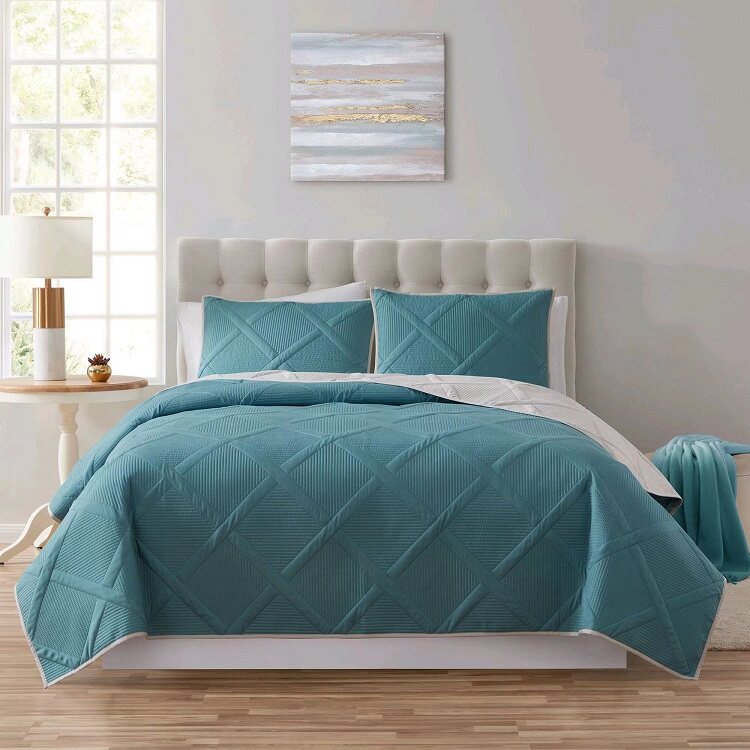
Material of Quilts & Bedspreads
Cotton
A highly popular bedding material across the board, it’s little surprise that cotton ranks among the most common bedspread fabrics. With Egyptian cotton particularly favoured for its softness, breathability, and durability, this is a long-time favourite.
Bamboo
High quality and luxurious, bamboo bedding is an increasingly popular pick among households looking for top-of-the-range blankets and bedspread that last. Hypoallergenic, silky soft, and, importantly, environmentally friendly, there aren’t many textiles that rival bamboo bedding.
Eucalyptus silk
Just like bamboo, eucalyptus silk is an ethical pick that’s both silky soft and eco-friendly. As well as being wholly breathable, moisture wicking, and hypoallergenic, eucalyptus silk bedspreads require roughly 95% less water and 30% less energy to produce than cotton equivalents.
Polyester
A synthetic material that’s durable, hypoallergenic, and hygienic, you’ll also often find that polyester bedspreads are priced relatively affordably. One of the downsides of polyester bedding, however, is that it doesn’t naturally regulate your body temperature, so you may find you struggle to keep comfortable whether it’s too hot or too cold – though, of course, if you’re using your bedspread as an aesthetic feature, that might not matter so much!
Velvet
Luxuriously soft and irresistibly comfortable, velvet bedding is chic and stylish, and gives your bedroom an immediate lift. With velvet, you’re also getting a hardy textile that naturally keeps you warm – ideal for when you need an extra layer to combat the winter temperature drop.
Step back in time and discover the fascinating history of quilts. With their origins in medieval times, quilting evolved to become a beloved craft.
Historically, individuals made quilts to capture and celebrate social history, or a special occasion. Many of them tell stories of their creators and their communities.
Dating back to early examples, quilts have been cherished as family heirlooms for generations. Often, they were made collaboratively by family members, further cementing themselves as a way to remember family as time passes.
Quilting has changed over the centuries and it can reflect the culture of the times. The history of quilting includes stories of creativity, perseverance, and even rebellion. For example, quilt codes were used during the Civil War as a form of communication.
Today, quilting remains a beloved activity and an expression of creativity.
Components of Quilts & Bedspreads
Top layer
This is the decorative part of the traditional quilt, featuring a pattern or artwork. It’s usually made of cotton, although other fabrics can be used as well, including velvet, silk, tulle, polyester, and microfiber.
Batting
The middle of the quilt, or the batting, is a padded layer that gives the quilt its warmth. Batting is traditionally made of wool, down, feathers, or cotton.
Bottom layer
The bottom of the quilt is normally a solid piece of fabric in the same material as the top.
How to Maintain Quilts & Bedspreads
Clean thoroughly
Before storing your quilt, it's essential to ensure it's clean and free of any stains. Follow the washing instructions mentioned above and let it dry completely before proceeding to the next step.
Use a cotton storage bag
Cotton is a breathable material that circulates air, preventing mold and mildew. Avoid using plastic bags or containers as they can trap moisture and cause damage.
Add protection
To further protect your quilt, wrap it in acid-free tissue paper before placing it in the cotton storage bag. This will help prevent any discoloration over time.
You can also add cedar chips or lavender sachets to your storage bag for added protection against moths and other pests. These natural remedies will also add a pleasant scent to your stored quilt.
Store in a cool, dry place
When storing your quilt, choose a cool and dry place away from direct sunlight. Basements or attics are not ideal, as they can be prone to fluctuations in temperature and humidity. Instead, opt for a closet or under-the-bed storage solution.
Check and refold periodically
It's important to periodically check on your stored quilt, especially if it will be stored for a long time. This will help prevent any damage or discoloration that may occur. You can also refold the quilt to prevent any creases from forming.
Our Factory
We are happy to cooperate with the customer to develop new items to meet the market, and also we share new designs or ideas with the customer, making samples to test the market. In the production period, our QC visits the factory to monitor the quality and will point out and correct it as soon as find the quality problem. We never encountered big quality problems, and as soon as the customer finds some quality problem, we have and will do our best to solve this to satisfy the consumers.


FAQ
As one of the leading quilts & bedspreads manufacturers and suppliers in China, we warmly welcome you to buy high-grade quilts & bedspreads for sale here from our factory. All custom made home textiles are with high quality and competitive price.