


Knitted Throws
Shanghai Smike International Trading Co. Ltd. was established in 2010, located in Shanghai, China. Specialized in exporting of quilts, bedspreads, duvet covers, sheet sets, comforter sets, blankets, toys, etc. We have rich experience in home textiles. We have many customers from wholesalers to retailers all over the world, such as Dolz, JHL, MH, Luhta, and Babyelegance.
When stepping into home textiles, SMIKE is devoted to building the integrated service from development, and production to after-sale service. We could customize according to every different requirement and develop new products with our professional design team.
SMIKE enjoys a good reputation in the world of our competitive price, perfect after-sale service, and strict QC quality control systems. We have joined some exhibitions like Frankfurt Fair, Canton Fair, East China Fair In Shanghai, and many other fairs all over the world to receive new and old customers. We are acquainted with the market and pay close attention to the tendency of fashion. Our management idea is " WIN-WIN COOPERATION".If we are lucky to have the opportunity to cooperate with you, we believe Smike will be in your good partner list.
Why choose us?
Rich experience
We have an embroidery pattern and printing pattern design team with more than 10 years of design research on home textiles. Our designs are recognized by customers from various countries.
Professional solution
With rich experience and one-to-one service, we can help you choose products and answer technical questions.
Quality control
Our quality inspection team has established a strict quality control system to conduct comprehensive inspections of products, discover and solve problems promptly, and ensure the quality of products or services.
Global shipping
We have a very professional and stable transportation team that can quickly arrange delivery and transportation, so that you can receive the goods you ordered as quickly as possible. Can reduce your time cost.


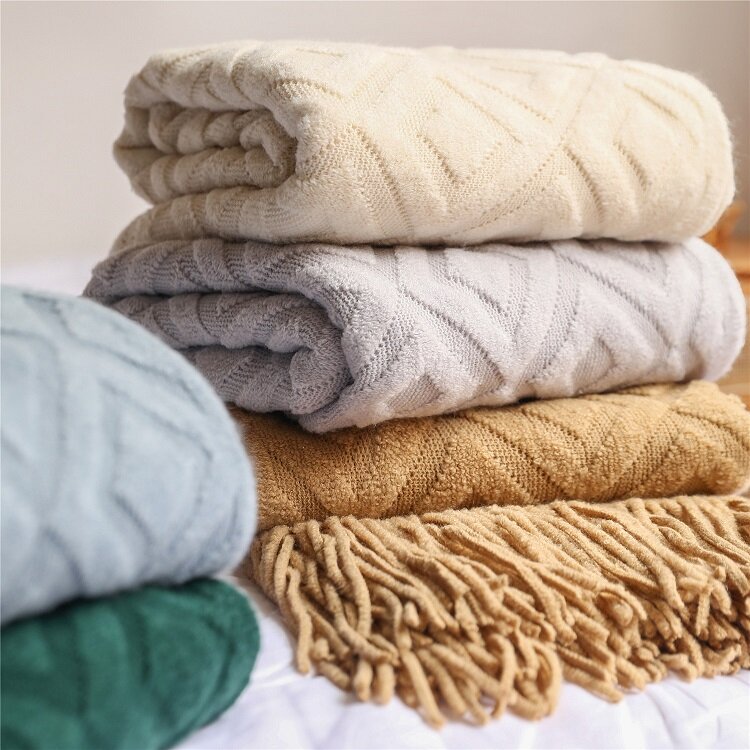
Knitted throws have long been cherished for their warmth and comfort, wrapping us in a cocoon of coziness during chilly evenings or lazy afternoons. However, these delightful textile creations offer more than just a snug embrace. From their exquisite craftsmanship to their versatility and therapeutic benefits, knitted throws have become a beloved household staple for a myriad of reasons.
Types of Knitted Throws
Improved sleep quality
The soft and breathable nature of knitted throws helps regulate body temperature, creating a comfortable and conducive environment for better sleep. The cosy embrace of a knitted throw can promote uninterrupted rest and enhance sleep quality.
Stress and anxiety reduction
Wrapping oneself in a knitted throw induces a sense of security and relaxation. The gentle pressure and soothing texture provide comfort, reducing stress and anxiety. The cosy sensation mimics a hug, releasing feel-good hormones and promoting a sense of calmness.
Pain relief
Knitted throws with added weight can offer therapeutic benefits for individuals experiencing pain or discomfort. The weight distribution applies gentle pressure to the body, helping to alleviate muscle tension and providing relief from conditions such as fibromyalgia or arthritis.
Sensory stimulation
The varied textures and tactile experience of knitted throws can offer sensory stimulation, benefiting individuals with sensory processing disorders or autism. The soft touch and comforting feel of the knitted fabric can have a grounding effect and provide a soothing experience.
Increased focus and concentration
Being wrapped in a knitted throw creates a cosy and secure environment that promotes focus and concentration. This benefit is particularly valuable for children or individuals with attention deficit disorders, helping them stay calm and engaged.
Versatility and adaptability
Knitted throws come in various sizes and weights, catering to different needs and preferences. Whether used as lap blankets, throws, or bed covers, they provide versatility and adaptability, ensuring warmth and comfort in various settings.
Aesthetic appeal and personal expression
Knitted throws are not only functional but also aesthetically pleasing. With their intricate patterns, designs, and wide range of colours, they allow individuals to express their personal style and add a touch of beauty to their living spaces.
Wool
It provides excellent insulation while allowing moisture to evaporate, but is quite heavy. However, it is a great choice if you want a very heavy, warm throw blanket for yourself—but make sure to check beforehand if you are allergic or sensitive to wool.
Fleece
These are super soft, lightweight yet cozy and extra warm, making it a perfect fabric for the entire year. Created usually from polyester, fleece is hydrophobic and good at wicking away moisture, hence, these blankets are popular with children. The fleece throw along with a sherpa backing will add an extra dimension of comfort and warmth.
Cotton
These fibers are made from the cotton plant and offer soft, breathable, comfortable, and long-lasting fabric. Throw blanket made of cotton hold up well to multiple washing, making them a good choice for those who suffer from allergies. Depending on the weave, cotton can be lightweight enough for use in summers, or heavy enough for winter warmth. Providing ample, cozy insulation, cotton is durable and easy to maintain.
Down
This fabric is filled with a layer of feathers (goose or duck feathers) to make the blanket thick, fluffy, and light. It is the most effective insulator and is also breathable, will keep you cool in summer and very warm in winter. If you want a high-quality fabric that is very insulated, consider going with a down throw blanket. However, it is not a good option for people with allergies as this fabric is typically made of goose feathers.
Synthetics
Many types of synthetic fabrics are also used for blankets such as acrylic, polyester, and microfiber. Though synthetic throw blankets are warm, they often attract a good deal of static electricity and tend to hold onto hair, dust. Generally, inexpensive, synthetic throws are a good option if you have a stricter budget, but remember that they are more likely to have issues of pilling and wear.
Vellux
Popularly known as ‘hotel blankets,’ vellux blankets are perfect for every season of the year. It contains a thin foam core surrounded by a soft nylon plush with a velvety texture. Warm and soft, vellux throws can stand up to repeated washings even at high temperatures. As it is hypoallergenic fabric, it is a great choice for you if you have allergies.
Cashmere
This is one of the most sought-after fibers in the world. Sumptuous and extremely soft, cashmere throw blankets are warm, light, and silky, but they are also very expensive. It has fantastic insulation, and if you can afford it, it can be a great addition to your bedding during chilling colder nights.
Application of Knitted Throws
Table runners
I don’t own many traditional table clothes but no problem, I have plenty of knitted throws. Depending on the thickness of the knitted throw, it can work wonderfully as a tablecloth or table runner. I find that a runner works better than a tablecloth because most throws are smaller than the table.
To use as a table runner, fold it to the desired width and place it in the center of the table. I like to bunch it up ever so slightly so it doesn’t look so perfect on the table.
Use outdoors
Using throw blankets outdoors requires you to use the proper knitted throw. I tend to use my knitted throw on my covered outdoor areas. I just bring them in and wash them when needed. Draping a throw over the outdoor rockers on the front porch instantly creates a more welcoming vibe, don’t you think?
On a couch, ottoman….or floor
We are throw people, so you will find plenty of knitted throws in our family room. If blankets are not on the couch, ottoman or floor…let’s be real, I like to place them in knitted throws. I roll them up so they look neat and are ready to go when needed.
Drape over an accent chair
Draping a knitted throw over an accent chair in my dining area is more decorative than functional… unless someone gets cold while eating. Placing it on the back of the chair helps to soften the space. It also adds a ton of texture and color to a space.
Use as a tree skirt
I remember the year I was doing a tree with blush accents. I could not find a tree skirt that worked. No worries, I own a knitted throw! Just drape the knitted throws around the tree stand to easily conceal and coordinate with your tree accents. Since then it’s been a fairly common practice.
On the foot of a bed
Adding a knitted throw to the foot of a bed can create a more curated look for your bedding. I like to mix and match my pillows with my throws so things coordinate on my bed. Having a neutral base allows me to change things up seasonally as well
How to Maintain Knitted Throws
Inspect the blanket: Before washing, inspect your knitted blanket for any loose threads or signs of wear. Secure any loose ends to prevent unraveling during the wash.
Target stains: For localized stains, apply a small amount of mild detergent directly to the area. Using a soft cloth, gently dab the stain, being careful not to rub as this can damage the fibers and spread the stain.
Water preparation: Fill a basin or bathtub with lukewarm water—enough to submerge the blanket fully.
Detergent addition: Add a gentle, wool-safe detergent to the water and mix well to ensure it’s fully dissolved.
Submerge the blanket: Gently place the blanket in the water and lightly press it down to fully wet it. Avoid agitating or scrubbing as this can cause the knitted blanket to stretch or felt.
Soak: Allow the blanket to soak for about 15-30 minutes, which helps loosen dirt without mechanical agitation.
Drain and refill: Carefully drain the soapy water and refill the basin with clean lukewarm water for rinsing. Gently press the blanket to rinse out detergent. Repeat this process until the water runs clear and free of soap.
Remove excess water: Lift the blanket carefully, supporting it to prevent stretching. Lay it flat on a clean, dry towel and roll up the towel with the blanket inside to absorb excess water.
Air dry: Unroll and transfer the blanket to a dry towel or a mesh drying rack. Lay it flat to air dry, reshaping it as needed to retain its original dimensions. Avoid hanging knitted blankets, as gravity can cause them to stretch.
How to Choose the Right Knitted Throws
The blanket's material affects its texture, warmth, durability, and hypoallergenic properties. Common materials include cotton, Wool, fleece, microfiber, down, and bamboo. Consider your preferences, climate, and any allergies or sensitivities when selecting a material.
Think about the color scheme of the room where you plan to use the blanket. You'll want to choose a color that complements the existing decor. If you want to add visual interest to the room, you might choose a bold color or pattern that stands out.
Set a budget based on the material, quality, and brand you desire. Blanket prices can range from affordable to high-end, so determine your priorities and find a balance between quality and cost that suits your needs.
Reviews can be a great resource when choosing a blanket. They can help you gather information about how the blanket performs regarding comfort, quality, and durability.
Choose a blanket that corresponds to your bed size or intended use. Standard sizes include twin, full, queen, king, and throw blankets. If sharing the blanket, ensure it is large enough to accommodate both users comfortably.
Consider the blanket's insulation properties based on your climate and personal preferences. Heavier blankets like Wool or down provide warmth, while lighter materials like cotton or bamboo are more breathable and suitable for warmer temperatures.
Check the manufacturer's care instructions for washing, drying, and storage requirements. Some materials may require special care or are prone to wear and tear if improperly maintained. Opt for easy-to-care-for materials if you want a low-maintenance option.
Our Factory
We are happy to cooperate with the customer to develop new items to meet the market, and also we share new designs or ideas with the customer, making samples to test the market. In the production period, our QC visits the factory to monitor the quality and will point out and correct it as soon as find the quality problem. We never encountered big quality problems, and as soon as the customer finds some quality problem, we have and will do our best to solve this to satisfy the consumers.


FAQ
As one of the leading knitted throws manufacturers and suppliers in China, we warmly welcome you to buy high-grade knitted throws for sale here from our factory. All custom made home textiles are with high quality and competitive price.
budget friendly blankets, steampunk blankets, oversized throws