


Hey there! As a supplier of knitted throws, I often get asked about the safety concerns associated with using these cozy items. So, I thought I'd take the time to break it all down for you.
Let's start with the materials. Most knitted throws are made from natural fibers like wool, cotton, or a blend of both. These materials are generally safe and non - toxic. Wool, for example, is a natural insulator. It's breathable, which means it can help regulate body temperature. Whether it's a chilly winter night or a cool summer evening, a Yellow Knitted Herringbone Throw Blanket made of wool can keep you warm without making you feel too hot.
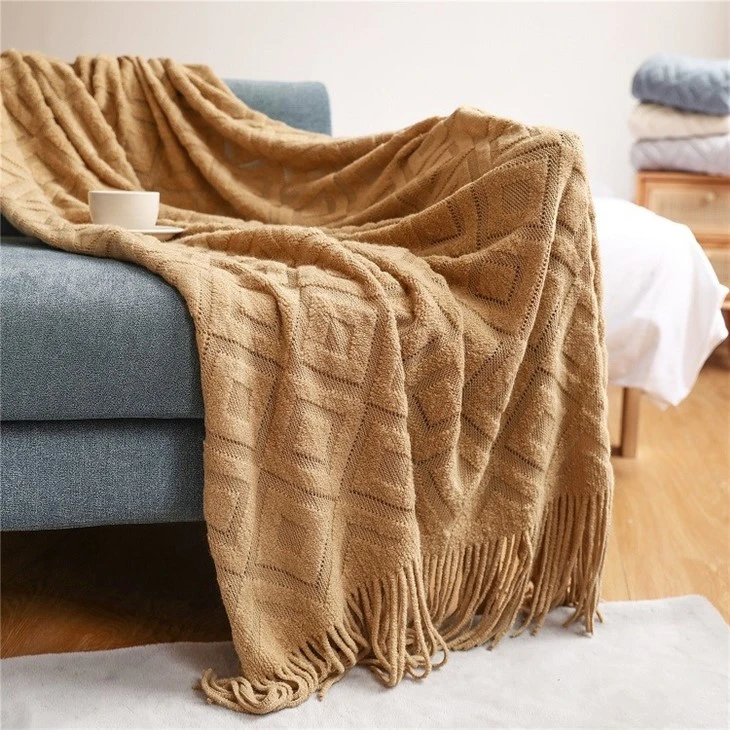
However, some people might be allergic to wool. Wool allergies are relatively rare, but they do exist. If you're allergic to wool, it can cause skin irritation, itching, and redness. In such cases, you might want to opt for a knitted throw made from cotton. Cotton is hypoallergenic, soft, and gentle on the skin. Our Camel Knit Throw Blanket with Tassels in cotton is a great choice for those with sensitive skin.
Another safety aspect to consider is flammability. Natural fibers like wool and cotton are less flammable compared to synthetic materials. Wool, in particular, has a high ignition temperature and is self - extinguishing. This means that it's less likely to catch fire easily and will stop burning on its own if it does catch fire. However, it's still important to follow basic fire safety rules. Don't place a knitted throw too close to an open flame, like a fireplace or a candle.
When it comes to the manufacturing process, we take safety very seriously. We ensure that all our knitted throws are dyed using non - toxic dyes. These dyes are free from harmful chemicals like lead, mercury, and other heavy metals. This is crucial because these heavy metals can be absorbed through the skin and cause long - term health problems. Our Jacquard Diamond Pattern Knit Throw Blanket is dyed using eco - friendly dyes, so you can be sure it's safe for you and your family.
Now, let's talk about the physical structure of knitted throws. Knitted fabrics have a certain amount of stretch. This stretch can be a double - edged sword. On one hand, it makes the throw more comfortable to use as it can conform to your body shape. On the other hand, if there are loose threads or frayed edges, there's a risk of entanglement. This is especially a concern if you have children or pets. We always make sure to finish our knitted throws properly, trimming any loose threads and securing the edges to prevent fraying.
In addition, some knitted throws have tassels. Tassels can be a decorative element, but they can also pose a choking hazard for small children. If you're using a knitted throw with tassels around kids, make sure to keep an eye on them to prevent any accidents.
Cleaning is also an important part of maintaining the safety of knitted throws. Different materials require different cleaning methods. For example, wool throws should be dry - cleaned or hand - washed in cold water with a mild detergent. Machine - washing wool can cause it to shrink or lose its shape. Cotton throws are generally more forgiving and can be machine - washed on a gentle cycle. Always follow the care instructions on the label to ensure the longevity and safety of your knitted throw.
As a supplier, we understand the importance of providing safe products. We test all our knitted throws to meet industry safety standards. We want you to be able to enjoy your knitted throw without having to worry about any safety issues.
If you're in the market for high - quality, safe knitted throws, we'd love to have a chat with you. Whether you're a retailer looking to stock our products or an individual interested in purchasing in bulk, we're here to help. Just reach out, and we can start discussing your needs and how we can meet them.
References

- Textile safety standards and regulations from relevant industry bodies.
- Research on natural fiber properties and their safety aspects.