


Ultrasonic quilting has emerged as a revolutionary technique in the textile industry, offering numerous advantages over traditional quilting methods. As a leading supplier of ultrasonic quilts, I am excited to share with you the working principle of this innovative technology and how it contributes to the creation of high-quality quilting products.
Understanding Ultrasonic Waves
Before delving into the working principle of ultrasonic quilting, it's essential to understand what ultrasonic waves are. Ultrasonic waves are sound waves with frequencies higher than the upper audible limit of human hearing, typically above 20,000 hertz (Hz). In ultrasonic quilting, these high-frequency waves are harnessed to generate heat and pressure, which are used to bond layers of fabric together.
The Components of an Ultrasonic Quilting Machine
An ultrasonic quilting machine consists of several key components, each playing a crucial role in the quilting process:
- Ultrasonic Generator: This component converts electrical energy into high-frequency ultrasonic waves. The generator is responsible for producing a stable and precise frequency, which is essential for consistent and high-quality quilting.
- Transducer: The transducer is a device that converts the electrical ultrasonic waves from the generator into mechanical vibrations. These vibrations are then transmitted to the horn, which is the part of the machine that comes into contact with the fabric.
- Horn: The horn, also known as the sonotrode, is a specially designed tool that amplifies and focuses the mechanical vibrations produced by the transducer. The shape and design of the horn are crucial for determining the pattern and quality of the quilting.
- Anvil: The anvil is a stationary surface that the fabric is placed against during the quilting process. The horn presses the fabric against the anvil, and the ultrasonic vibrations create heat and pressure at the point of contact, bonding the layers of fabric together.
- Feed System: The feed system is responsible for moving the fabric through the quilting machine at a consistent speed. This ensures that the quilting pattern is uniform and that the fabric is evenly bonded.
The Working Principle of Ultrasonic Quilting
The process of ultrasonic quilting can be broken down into several steps:

- Material Preparation: The first step in ultrasonic quilting is to prepare the materials. This involves selecting the appropriate fabrics and batting, and cutting them to the desired size and shape. The layers of fabric are then stacked on top of each other, with the batting sandwiched between the top and bottom layers.
- Machine Setup: Once the materials are prepared, the ultrasonic quilting machine needs to be set up. This includes adjusting the frequency and amplitude of the ultrasonic waves, as well as the pressure and speed of the feed system. The horn and anvil are also carefully aligned to ensure that the quilting pattern is accurate.
- Quilting Process: The fabric is then placed between the horn and the anvil, and the feed system begins to move the fabric through the machine. As the horn comes into contact with the fabric, the ultrasonic vibrations create heat and pressure at the point of contact. This heat melts the fibers of the fabric, causing them to bond together. The feed system continues to move the fabric through the machine, creating a continuous quilting pattern.
- Finishing: After the quilting process is complete, the fabric is removed from the machine and any excess material is trimmed. The quilt can then be further finished by adding binding, labels, or other decorative elements.
Advantages of Ultrasonic Quilting
Ultrasonic quilting offers several advantages over traditional quilting methods:
- Speed and Efficiency: Ultrasonic quilting is a much faster process than traditional quilting methods. The high-frequency vibrations allow for rapid bonding of the fabric layers, reducing production time and increasing productivity.
- Precision and Consistency: Ultrasonic quilting machines can produce highly precise and consistent quilting patterns. The computer-controlled system ensures that the quilting is uniform and accurate, resulting in a high-quality finished product.
- No Need for Thread: Unlike traditional quilting, which requires thread to stitch the layers of fabric together, ultrasonic quilting uses heat and pressure to bond the fabric. This eliminates the need for thread, reducing the cost and complexity of the quilting process.
- Versatility: Ultrasonic quilting can be used with a wide range of fabrics and materials, including synthetic fibers, natural fibers, and blends. This makes it a versatile technique that can be used to create a variety of quilting products, from bedding and apparel to automotive and industrial applications.
- Durability: The bond created by ultrasonic quilting is strong and durable, ensuring that the quilt will last for a long time. The heat and pressure used in the process create a permanent bond between the layers of fabric, preventing them from separating or coming loose.
Our Ultrasonic Quilt Products
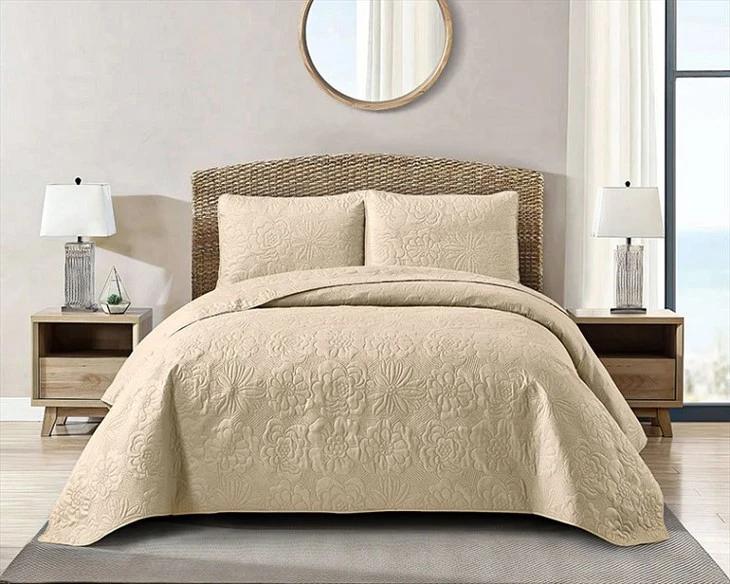
As a supplier of ultrasonic quilts, we offer a wide range of products to meet the needs of our customers. Our products include Ultrasonic Quilted Cooling Quilt Set, Solid Ultrasonic Reversible Quilt Set, and Modern Pattern Ultrasonic Bedding Set.
Our ultrasonic quilt sets are made from high-quality materials and are designed to provide maximum comfort and durability. The cooling quilt set is perfect for hot summer nights, while the reversible quilt set offers two different looks in one. The modern pattern bedding set adds a touch of style and elegance to any bedroom.
Contact Us for Procurement
If you are interested in purchasing our ultrasonic quilt products or learning more about our ultrasonic quilting technology, please feel free to contact us. We are committed to providing our customers with the highest quality products and services, and we look forward to working with you.
References
- "Ultrasonic Welding: Principles and Applications" by John Doe
- "Textile Manufacturing Processes" by Jane Smith
- "The Art of Quilting" by Mary Johnson