


When it comes to creating a visually stunning and harmonious colorful patchwork quilt set, the arrangement of patches plays a pivotal role. As a supplier of high - quality colorful patchwork quilt sets, I've had the privilege of exploring various patch arrangement techniques. In this blog, I'll share some of the best ways to arrange patches to achieve a captivating quilt set.
1. Color Theory in Patch Arrangement
Color is the heart of a patchwork quilt set. Understanding basic color theory can significantly enhance the overall aesthetic.
Complementary Colors
Complementary colors are those that are opposite each other on the color wheel, such as red and green, blue and orange, or yellow and purple. Arranging patches with complementary colors side by side creates a high - contrast and vibrant look. For example, in our Star Patchwork Quilt Set, the use of complementary colors in the star - shaped patches makes the stars pop against the background, adding a dynamic and eye - catching element.
Analogous Colors
Analogous colors are adjacent to each other on the color wheel, like blue, blue - green, and green. Using analogous colors in patch arrangement gives a more harmonious and soothing effect. A quilt set with analogous colors can create a sense of unity and tranquility. For instance, a quilt featuring patches in various shades of pink, from light blush to deep rose, can evoke a soft and romantic atmosphere.
Monochromatic Scheme
A monochromatic color scheme involves using different shades and tints of a single color. This approach can create a sophisticated and elegant look. In a monochromatic patchwork quilt set, the focus is on the texture and pattern of the patches rather than a riot of colors. Our Pinwheel Patchwork Cotton Quilt Set can be designed in a monochromatic scheme, where the pinwheel shapes are made from different tones of a single color, highlighting the geometric pattern.
2. Pattern and Shape Arrangement
The patterns and shapes of the patches also contribute to the overall design of the quilt set.
Random Arrangement
A random arrangement of patches can give a free - spirited and bohemian feel. It involves placing patches of different colors, shapes, and sizes without a strict pattern. This style is great for creating a unique and one - of - a - kind look. However, it's important to still keep in mind the color balance to avoid a chaotic appearance. Randomly arranged patches can be used to create a sense of movement and spontaneity in the quilt set.
Symmetrical Arrangement
Symmetry in patch arrangement provides a sense of order and stability. It can be achieved by creating mirror images of patches on either side of a central axis. For example, a quilt set with a symmetrical pattern can have two identical halves, with the patches arranged in the same way on both sides. This style is often used in more traditional and formal quilt designs.
Geometric Patterns
Geometric patterns, such as squares, triangles, and hexagons, are popular in patchwork quilt sets. Arranging patches in geometric patterns can create a modern and structured look. For example, arranging square patches in a checkerboard pattern or triangles in a starburst pattern can add a sense of precision and visual interest. Our Vintage Velvet Patchwork Quilt Set can be designed with geometric patterns to give it a classic yet contemporary edge.
3. Size and Scale Considerations
The size and scale of the patches can greatly affect the perception of the quilt set.
Large vs. Small Patches
Using a combination of large and small patches can add depth and dimension to the quilt. Large patches can serve as focal points, while small patches can fill in the gaps and add detail. For example, in a quilt set, a few large, bold - colored patches can be surrounded by a multitude of smaller, more delicate patches. This contrast in size creates a visually engaging composition.
Gradation of Size
Gradually changing the size of the patches from one end of the quilt to the other can create a sense of movement and flow. For instance, starting with large patches at the center of the quilt and gradually decreasing the size towards the edges can draw the eye towards the center, creating a focal point.

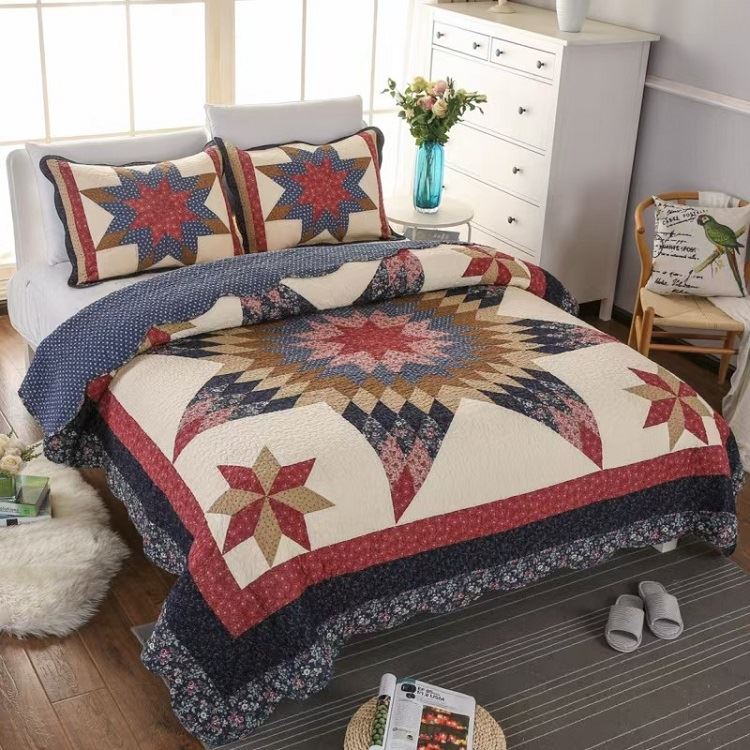
4. Border and Sashing
The border and sashing (the strips of fabric that separate the patches) are important elements in patch arrangement.
Border Design
A well - designed border can frame the quilt set and enhance its overall appearance. It can be made from a single color or a combination of colors. A wide border can give the quilt a more substantial look, while a narrow border can provide a more delicate finish. The border can also be used to tie in the colors and patterns of the patches.
Sashing Function
Sashing not only separates the patches but also helps to create a more organized and structured look. It can be used to add a bit of contrast or to blend the colors of the patches together. For example, a light - colored sashing can be used to separate dark - colored patches, making the patches stand out more.
5. Theme - Based Arrangement
Creating a theme - based patchwork quilt set can add a personal and meaningful touch.
Nature Theme
A nature - themed quilt set can feature patches in colors and patterns that represent elements of nature, such as flowers, leaves, and birds. Arranging these patches in a way that mimics a natural scene, like a garden or a forest, can create a beautiful and calming effect.
Cultural Theme
Cultural themes can draw inspiration from different cultures around the world. For example, a quilt set with a Japanese theme can feature patches with traditional Japanese patterns, such as cherry blossoms or koi fish. Arranging these patches in a way that reflects Japanese design principles, like simplicity and balance, can create a unique and culturally rich quilt set.
In conclusion, the best way to arrange the patches in a colorful patchwork quilt set depends on various factors, including color theory, pattern and shape, size and scale, border and sashing, and theme. By carefully considering these elements, you can create a quilt set that is not only visually appealing but also tells a story.
If you're interested in purchasing our high - quality colorful patchwork quilt sets or have any questions about patch arrangement, we'd love to hear from you. Feel free to reach out to us for more information and to discuss your specific needs. We're committed to providing you with the best products and services.
References
- "The Quilter's Color Workshop" by Jera Brandvig
- "Patchwork Quilts: Design and Techniques" by Wendy Sheppard