


Making a patchwork quilt larger is a common need for many quilt enthusiasts and those who require bigger quilts for various purposes. As a patchwork quilts supplier, I've encountered numerous customers with this query. In this blog, I'll share several effective methods to make a patchwork quilt larger, along with some tips and considerations.
Adding Borders
One of the simplest and most popular ways to increase the size of a patchwork quilt is by adding borders. Borders can not only expand the quilt's dimensions but also enhance its overall aesthetic appeal.
Types of Borders
- Straight Borders: These are the most basic type of borders. You can cut long strips of fabric in your desired width and sew them around the edges of the quilt top. For example, if you want to add a 4 - inch border, cut strips that are 4 inches wide and long enough to fit each side of the quilt. You can use a single fabric for all the borders to create a unified look, or mix and match different fabrics for a more eclectic style.
- Angled Borders: Angled borders, such as bias borders, can add a unique touch to your quilt. Bias strips are cut on the diagonal of the fabric, which gives them more stretch and flexibility. This can be useful for creating curves or adding a more fluid look to the quilt. To make a bias border, first, cut your fabric into long strips at a 45 - degree angle. Then, sew the strips together end - to - end to create a continuous strip long enough to go around the quilt.
Sewing the Borders
When sewing the borders, start with the side borders. Pin the border strips to the sides of the quilt top, making sure they are straight and evenly spaced. Sew the strips in place using a ¼ - inch seam allowance. Press the seams open or towards the border, depending on your preference. Then, attach the top and bottom borders in the same way.
Incorporating Additional Blocks
Another way to make a patchwork quilt larger is by adding more blocks to the existing quilt top.
Choosing the Blocks
- Matching Blocks: If you have some leftover blocks from the original quilt, you can use them to expand the quilt. Make sure the blocks match in terms of size, color, and pattern. For example, if your original quilt is made up of 12 - inch square blocks, use 12 - inch square blocks for the expansion.
- New Blocks: You can also create new blocks to add to the quilt. This gives you the opportunity to introduce new colors, patterns, or designs. For instance, if your quilt has a traditional patchwork pattern, you can add some modern - style blocks to create an interesting contrast.
Arranging the Blocks
Once you have your blocks, decide how you want to arrange them. You can add blocks along the edges of the quilt, or insert them in the middle to create a more complex design. When sewing the new blocks to the existing quilt, use a ¼ - inch seam allowance and make sure the seams are aligned properly.
Piecing Multiple Quilts Together
If you have multiple smaller patchwork quilts, you can piece them together to create a larger one.
Preparing the Quilts
First, make sure the quilts are in good condition and have similar thicknesses. You may need to trim the edges of the quilts to make them straight and even. If the quilts have different colors or patterns, consider how they will look when combined. You can create a harmonious look by choosing quilts that have complementary colors or similar themes.
Sewing the Quilts Together
Lay the quilts out on a flat surface and decide how you want to arrange them. Pin the quilts together along the edges where you want to join them. Sew the quilts together using a ¼ - inch seam allowance. You may need to use a walking foot on your sewing machine to ensure even stitching, especially if the quilts are thick.
Tips and Considerations
- Fabric Selection: When making a patchwork quilt larger, it's important to choose fabrics that are compatible with the existing quilt. Consider the color, pattern, and texture of the fabrics. If you're using new fabrics, wash them first to prevent shrinkage and color bleeding.
- Pattern Continuity: If your quilt has a specific pattern, make sure to maintain the continuity when adding borders, blocks, or piecing quilts together. This will give the quilt a more cohesive look.
- Quilting After Expansion: Once you've made the quilt larger, you may need to do some additional quilting. You can continue the existing quilting pattern or create a new one. Make sure to quilt the entire quilt evenly to prevent it from shifting or bunching.
Our Patchwork Quilt Products
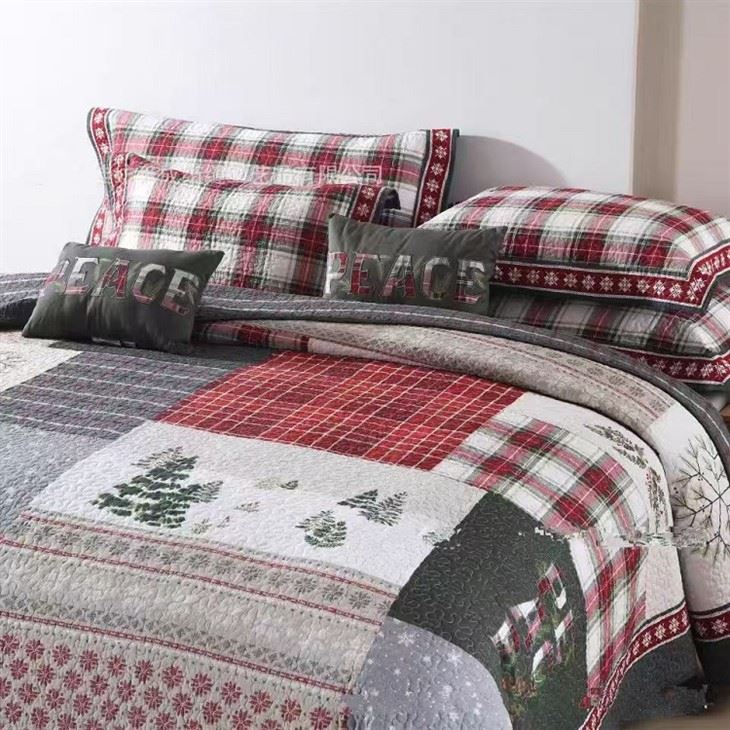
As a patchwork quilts supplier, we offer a wide range of high - quality patchwork quilts. Our Rustic Patchwork Quilt Bedding features a warm and cozy design, perfect for adding a touch of rustic charm to your bedroom. The Diamond Patchwork Quilt Set is a classic choice, with its elegant diamond - shaped patterns. And our Patchwork Star Cotton Quilt Bedding is made from soft cotton, providing both comfort and style.
If you're interested in our patchwork quilts or have any questions about making a patchwork quilt larger, please feel free to contact us for procurement and negotiation. We're always happy to assist you in finding the perfect quilt for your needs.

References
- "The Complete Guide to Patchwork Quilting" by Quilting Experts
- "Patchwork Quilt Design Ideas" magazine
This blog provides a comprehensive guide on how to make a patchwork quilt larger, which can be useful for both beginners and experienced quilters. By following these methods and tips, you can transform your small patchwork quilt into a larger, more impressive one. And don't forget to check out our great selection of patchwork quilts!