


Colors play a crucial role in the aesthetic appeal of a digital printed quilt set. As a digital printed quilt set supplier, I've witnessed firsthand how the same quilt can look strikingly different under various lighting conditions. Understanding these nuances is not only fascinating but also essential for both consumers and suppliers to make informed decisions.
The Science of Color Perception
Before delving into how lighting affects the colors of digital printed quilt sets, it's important to understand the basics of color perception. Our eyes perceive color through specialized cells called cones, which are sensitive to different wavelengths of light. When light hits an object, some wavelengths are absorbed, and others are reflected. The reflected wavelengths are what our eyes detect and interpret as color.
In the context of digital printed quilt sets, the inks used in the printing process determine which wavelengths of light are absorbed and reflected. Different inks have different spectral properties, which means they interact with light in unique ways. For example, a red ink will absorb most of the light in the blue and green wavelengths and reflect the red wavelengths, making the area printed with that ink appear red to our eyes.
Natural Lighting
Natural lighting, specifically sunlight, is the most dynamic and variable source of light. Throughout the day, the color temperature and intensity of sunlight change, which can significantly impact the appearance of a digital printed quilt set.
Morning Sunlight
In the morning, sunlight has a warmer color temperature, with a higher proportion of red and orange wavelengths. This warm light can make the colors in a quilt set appear richer and more vibrant. For instance, a Digital Printing Pattern Cotton Quilt Set with earthy tones like browns and oranges will look especially warm and inviting in the morning sun. The reds may appear more intense, and the yellows may take on a golden hue.
Midday Sunlight
At midday, sunlight is at its brightest and has a cooler color temperature, with more blue and white wavelengths. Under this light, the colors in a quilt set may appear more true to their actual pigment. Colors like blues and greens will look crisp and clear, and the overall color balance of the quilt may seem more neutral. However, the high intensity of midday sunlight can also cause some colors to appear washed out, especially if the quilt is exposed to direct sunlight for an extended period.
Evening Sunlight
As the sun sets, the color temperature of sunlight becomes even warmer, with a strong emphasis on red and orange wavelengths. This can create a beautiful, soft glow on a digital printed quilt set. A Floral Cotton Quilt Set with pastel colors may take on a romantic, dreamy quality in the evening light. The pinks and purples may appear more saturated, and the overall look of the quilt can be quite enchanting.
Artificial Lighting
Artificial lighting comes in a variety of types, each with its own unique color characteristics. The most common types of artificial lighting used indoors are incandescent, fluorescent, and LED lights.
Incandescent Lights
Incandescent lights produce a warm, yellowish light similar to the color of evening sunlight. This type of light can make the colors in a quilt set look cozy and inviting. However, incandescent lights are not very energy - efficient, and their color rendering index (CRI) may not be as high as other types of lighting. A lower CRI means that some colors may not be accurately represented. For example, a Blue And White Striped Cotton Quilt Set may have a slightly yellowish tint under incandescent light, making the blues appear less true to their original color.
Fluorescent Lights
Fluorescent lights are more energy - efficient than incandescent lights, but they can have a wide range of color temperatures and CRIs. Some fluorescent lights have a cool, bluish tint, which can make the colors in a quilt set look harsh or unnatural. On the other hand, high - quality fluorescent lights with a high CRI can provide a more accurate representation of colors. However, fluorescent lights may also flicker, which can be distracting and may affect the overall perception of the quilt's colors.
LED Lights
LED lights are becoming increasingly popular due to their energy efficiency, long lifespan, and ability to produce a wide range of color temperatures. LED lights with a high CRI can accurately reproduce the colors in a digital printed quilt set. Warm - white LED lights can create a similar effect to incandescent lights, while cool - white LED lights can mimic the look of midday sunlight. This versatility allows consumers to choose the lighting that best suits the aesthetic they want to achieve for their quilt set.
Color Interaction and Contrast
In addition to the direct effect of lighting on individual colors, lighting also affects the way colors interact with each other in a quilt set. Contrast, which is the difference in color and brightness between different areas of the quilt, can be enhanced or diminished depending on the lighting conditions.
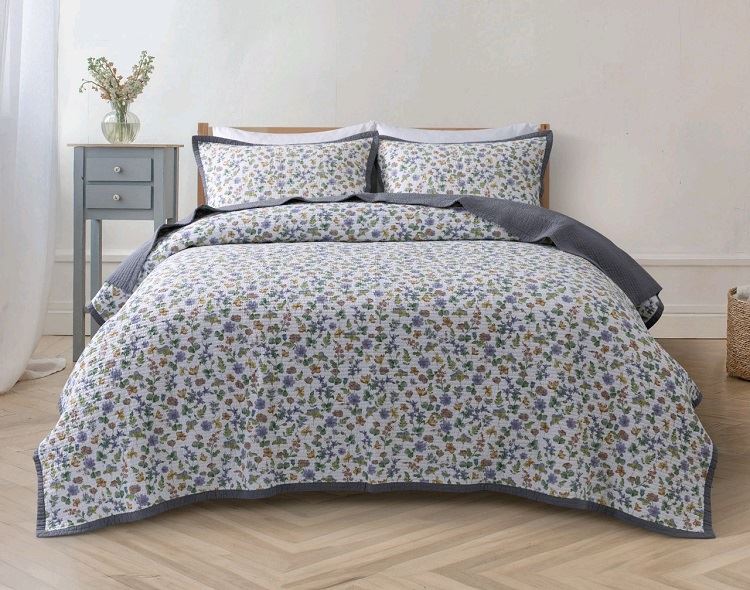
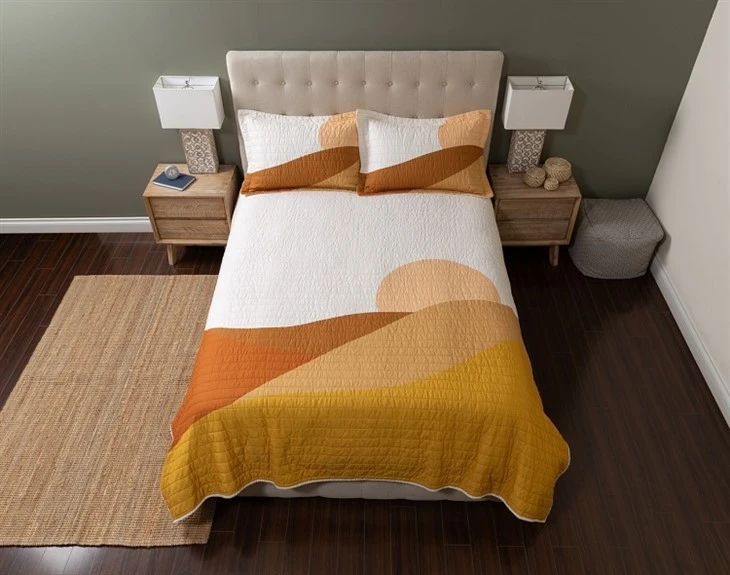
Under bright, direct light, high - contrast colors may become even more pronounced. For example, a quilt with bold black and white patterns will have a very striking appearance in midday sunlight or under bright LED lights. On the other hand, in soft, diffused light, the contrast may be less noticeable, creating a more harmonious and subdued look.
Implications for Consumers and Suppliers
For consumers, understanding how lighting affects the colors of a digital printed quilt set is crucial when making a purchase. They should consider the lighting conditions in the room where the quilt will be used. If the room has mainly natural light, they may want to choose a quilt set that looks its best under sunlight. If artificial lighting is the primary source, they should think about the type of bulbs they use and how they will impact the quilt's colors.
As a supplier, I take these factors into account when showcasing our products. We provide detailed product descriptions and high - quality images that try to represent the colors as accurately as possible under different lighting conditions. However, I always encourage potential customers to view the actual quilt set in person if possible to get a true sense of how the colors will look in their specific environment.
Contact for Purchase and洽谈
If you're interested in our digital printed quilt sets and want to learn more about how the colors will appear in your space, or if you have any questions about our products, please feel free to reach out. We're here to assist you in making the best choice for your home.
References
- Kuehni, R. G., & Schwarz, G. (2008). Color: An introduction to practice and principles. Wiley - Interscience.
- Wyszecki, G., & Stiles, W. S. (2000). Color science: Concepts and methods, quantitative data and formulae. Wiley - Interscience.