


Stonewashed quilts have gained significant popularity in recent years due to their unique, aged appearance and exceptional softness. As a stonewashed quilts supplier, I've witnessed firsthand the allure these quilts hold for consumers. In this blog, I'll delve into the science and process behind how stonewashed quilts age, offering insights that can enhance your understanding and appreciation of these cozy bedding essentials.
The Origins of Stonewashing
Stonewashing is a technique that originated in the denim industry. Back in the 1970s, manufacturers were looking for a way to give denim a worn - in look right out of the factory. They discovered that tumbling jeans with stones in large washing machines could achieve this effect. The stones would abrade the fabric, causing the indigo dye to fade and creating a soft, broken - in feel. This same concept was later applied to quilts, resulting in the creation of stonewashed quilts.
The Stonewashing Process for Quilts
The stonewashing process for quilts is a carefully orchestrated series of steps. First, the quilt fabric, usually cotton, is selected. Cotton is a popular choice because of its breathability, durability, and ability to absorb dyes well. Once the fabric is chosen, it is cut and sewn into the desired quilt pattern.
After the quilt is assembled, it is placed in a large industrial washing machine along with natural stones, typically pumice. The stones act as abrasives as the machine agitates the quilt. As the quilt tumbles with the stones, the surface fibers of the fabric are gently worn away. This abrasion not only gives the quilt a faded, aged appearance but also starts to break down the stiffness of the new fabric, making it softer.
During the stonewashing process, the fabric is also often treated with special enzymes. These enzymes help to further break down the surface fibers of the cotton, enhancing the softness and the aged look. The enzymes work by targeting the cellulose in the cotton fibers, causing them to weaken and break. This results in a more uniform fading and a silkier texture.
How Stonewashed Quilts Age Over Time
The aging process of stonewashed quilts is influenced by several factors, including how they are used, washed, and stored.
Normal Use
When a stonewashed quilt is used on a regular basis, it continues to age gracefully. The friction between the quilt and the body, as well as the movement on the bed, causes further abrasion of the fabric. This natural wear and tear can make the quilt even softer over time. As the quilt is used, the colors may also continue to fade slightly, adding to its rustic charm.
Washing
How a stonewashed quilt is washed plays a crucial role in its aging process. It is recommended to wash stonewashed quilts in cold water with a mild detergent. Hot water can cause the fabric to shrink and the colors to fade more rapidly. Over - washing or using harsh detergents can also damage the fabric fibers, leading to a less - than - desirable aging effect.
When washing a stonewashed quilt, it is best to use a gentle cycle in the washing machine. This helps to minimize the amount of agitation and reduces the risk of the fabric fraying. After washing, it is advisable to air - dry the quilt rather than using a dryer. The high heat in a dryer can cause the fabric to shrink and can also damage the aged look that has been carefully created.
Storage
Proper storage is essential for the long - term aging of stonewashed quilts. When not in use, the quilt should be stored in a cool, dry place away from direct sunlight. Sunlight can cause the colors of the quilt to fade more quickly and can also damage the fabric fibers. It is also a good idea to fold the quilt neatly to prevent creases from forming, as deep creases can lead to permanent damage over time.
The Benefits of the Aging Process
The aging of stonewashed quilts is not just about aesthetics; it also has several practical benefits.
Softness
As a stonewashed quilt ages, it becomes increasingly soft. The initial stonewashing process starts the softening, and with continued use and proper care, the quilt becomes almost like a second skin. This softness makes the quilt incredibly comfortable to sleep under, providing a cozy and luxurious experience.
Breathability
The aging process can enhance the breathability of the quilt. As the surface fibers are worn away, more air can circulate through the fabric. This is especially beneficial in warm weather, as it helps to keep the body cool and comfortable.
Durability
Although the fabric of a stonewashed quilt appears to be worn, the aging process actually helps to strengthen the quilt in some ways. The initial abrasion during stonewashing and the subsequent normal wear and tear cause the fibers to become more flexible and less likely to break. This means that a well - cared - for stonewashed quilt can last for many years.
Our Stonewashed Quilt Products
At our company, we offer a wide range of high - quality stonewashed quilts. Our Stonewashed Cotton Bedding collection features a variety of colors and patterns to suit different tastes. The stonewashing process we use ensures that each quilt has a unique, aged look and exceptional softness right from the start.
Our Stone Washed Cotton Quilt is made from premium cotton fabric, which is known for its durability and comfort. The careful stonewashing process gives it a beautiful, faded appearance that only gets better with time.
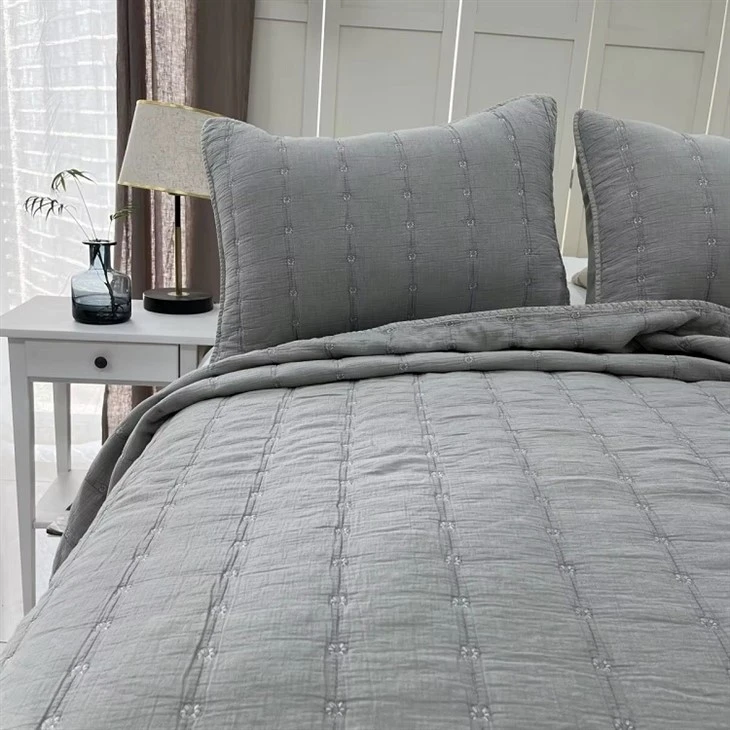
For those looking for a complete bedding set, our Ultra Soft Stone Washed Quilt Set is an excellent choice. It includes a quilt and coordinating pillow shams, all with the same soft, aged look.

Contact Us for Procurement
If you are interested in purchasing our stonewashed quilts for your home, business, or as a gift, we would love to hear from you. Whether you are a retailer looking to stock our products or an individual consumer in search of the perfect bedding, we are here to assist you. Please reach out to us to discuss your specific requirements and to start the procurement process.
References
- Textile Institute. (2018). "Handbook of Textile Finishing." Woodhead Publishing.
- Horrocks, A. R., & Anand, S. C. (Eds.). (2016). "Functional Finishing of Textiles." Wiley.
- Postle, R. (2001). "Textile Science: The Art and Science of Textiles." Pearson Education.