


Do knitted throws require a lot of maintenance? This is a question that many potential buyers often ask. As a supplier of high - quality knitted throws, I'm here to provide you with an in - depth analysis of the maintenance requirements for these cozy and stylish items.
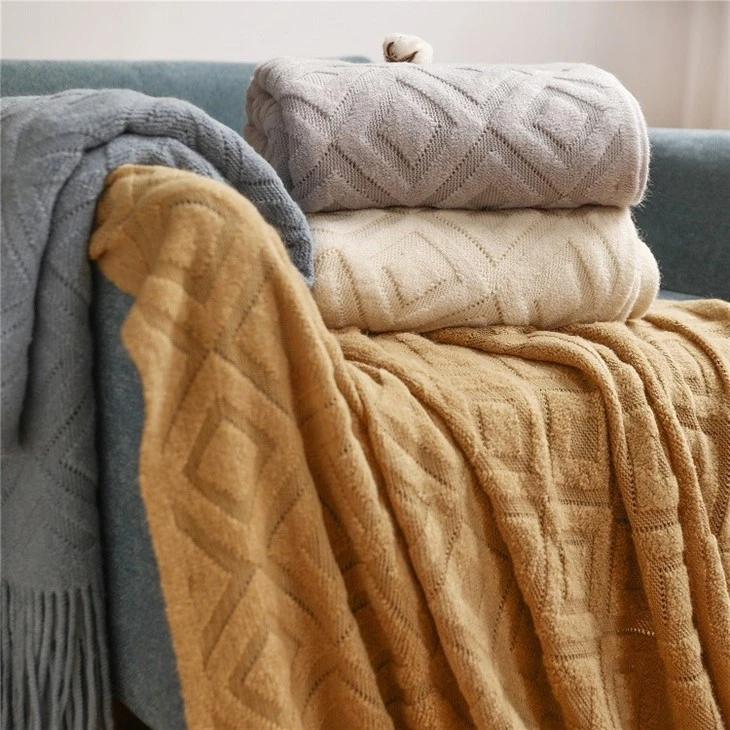
First, let's understand what knitted throws are. Knitted throws are soft, textured blankets made by interlocking yarns in a specific pattern. They come in various designs, colors, and sizes, adding a touch of warmth and elegance to any living space. For instance, our Herringbone Jacquard Knit Throw Blanket features a classic herringbone pattern that is both timeless and sophisticated.
One of the key factors that determine the maintenance level of knitted throws is the type of yarn used. Different yarns have different characteristics, and these can significantly affect how easy or difficult it is to take care of the throws.
Natural Fibers
- Wool
- Wool is a popular choice for knitted throws due to its excellent insulation properties. However, it does require some special care. Wool is prone to shrinking if it is exposed to high temperatures or excessive agitation. When washing a wool knitted throw, it is recommended to use a gentle cycle in cold water with a mild wool - specific detergent. Avoid wringing or twisting the throw, as this can damage the fibers and cause it to lose its shape. After washing, lay the throw flat to dry to prevent stretching. Our Camel Knit Throw Blanket with Tassels is made from high - quality camel wool, which gives it a luxurious feel but also requires careful maintenance.
- Cotton
- Cotton is a more low - maintenance option compared to wool. It is generally machine - washable in warm or cold water with a regular detergent. Cotton knitted throws can be tumble - dried on a low setting, but it's a good idea to check the care label first, as some cotton blends may have specific requirements. Cotton is also less likely to shrink or pill, making it a practical choice for those who want a hassle - free knitted throw.
Synthetic Fibers
- Acrylic
- Acrylic is a synthetic fiber that is often used in knitted throws because it is affordable, lightweight, and easy to care for. Acrylic throws can be machine - washed in warm water with a regular detergent and tumble - dried on a low setting. They are resistant to shrinking, stretching, and mildew, making them a great option for busy households or those who don't want to spend a lot of time on maintenance.
- Polyester
- Polyester is another synthetic fiber commonly used in knitted throws. It is durable, wrinkle - resistant, and easy to clean. Polyester throws can be washed in the washing machine on a normal cycle and dried in the dryer. They are also less likely to attract dust and allergens, which is beneficial for people with allergies.
Special Considerations for Different Patterns
The pattern of the knitted throw can also affect its maintenance. For example, our Jacquard Diamond Pattern Knit Throw Blanket has a complex jacquard pattern. These types of patterns may require a bit more attention during washing to ensure that the pattern remains intact. It's best to turn the throw inside out before washing to protect the pattern from abrasion.
Stain Removal
Stains are an inevitable part of life, and knitted throws are not immune to them. The key to successful stain removal is to act quickly. For minor stains, spot - cleaning with a mild detergent and a soft cloth can often do the trick. For more stubborn stains, it may be necessary to soak the stained area in a solution of water and detergent before washing the entire throw. However, be careful not to over - soak the throw, especially if it is made of natural fibers, as this can cause damage.
Storage
Proper storage is also an important aspect of maintaining knitted throws. When not in use, it's best to store the throws in a cool, dry place. Avoid storing them in plastic bags, as this can trap moisture and lead to mildew growth. Instead, fold the throws neatly and place them in a breathable cotton storage bag or a wooden chest. You can also add a few cedar chips to the storage container to repel moths, especially if the throw is made of wool.
Frequency of Cleaning
The frequency of cleaning a knitted throw depends on how often it is used. If the throw is used daily on a sofa or bed, it may need to be washed every few weeks. However, if it is used less frequently, such as as a decorative piece, it can be washed every few months. Regularly shaking out the throw and vacuuming it with a soft brush attachment can help remove dust and debris between washes.
In conclusion, while some knitted throws may require more maintenance than others, it is possible to find a knitted throw that fits your lifestyle and maintenance preferences. Whether you choose a natural fiber throw that requires a bit more care or a synthetic fiber throw that is easy to clean, there are options available to suit every need.

If you are interested in purchasing high - quality knitted throws for your home or business, we would love to hear from you. Our team of experts can provide you with more information about the different types of knitted throws we offer and their maintenance requirements. Contact us to start a procurement discussion and find the perfect knitted throws for your needs.
References
- Textile Institute. "Care and Maintenance of Textiles." A comprehensive guide on textile care, including knitted items.
- Woolmark Company. "Wool Care Guide." Specific information on the care of wool products.