


Do knitted throws attract dust easily? This is a question that many potential buyers and users of knitted throws often ask. As a supplier of high - quality knitted throws, I'd like to delve into this topic in detail, exploring the factors that influence dust attraction and how to manage it.
The Structure of Knitted Throws and Dust Attraction
Knitted throws are made through a process of interlocking loops of yarn. This unique structure creates a fabric with numerous nooks and crannies. From a scientific perspective, these small spaces can act as traps for dust particles. When dust - laden air passes over a knitted throw, the dust can become lodged within the loops of the yarn.
However, the degree to which a knitted throw attracts dust is not solely determined by its structure. The type of yarn used plays a crucial role. For instance, natural fibers like wool have a different electrostatic property compared to synthetic fibers. Wool can sometimes generate static electricity, which may attract more dust. On the other hand, synthetic fibers such as acrylic may have less static charge but can still trap dust due to their physical structure.
Factors Affecting Dust Attraction
Yarn Material
- Wool: Wool is a popular choice for knitted throws because of its warmth and softness. But it has a tendency to attract dust due to its ability to hold static charge. Static electricity acts like a magnet for dust particles floating in the air. For example, if you move a woolen knitted throw around a room, the friction can generate static, and dust will quickly adhere to it.
- Acrylic: Acrylic is a synthetic fiber that is often used to mimic the look and feel of wool. It generally has less static compared to wool. However, its fine fibers can still catch dust. Since acrylic is lightweight, it can be more prone to collecting dust that settles on surfaces over time.
- Cotton: Cotton is a natural fiber that is breathable and less likely to generate static. But its porous nature means that dust can get into the fabric. However, compared to wool, cotton knitted throws may attract dust at a slower rate.
Knitting Pattern
The knitting pattern of a throw also affects dust attraction. A tight - knit pattern, such as a herringbone stitch, has less open space between the yarns. This means that there are fewer places for dust to get trapped. For example, our Herringbone Jacquard Knit Throw Blanket has a relatively tight herringbone pattern. This pattern reduces the surface area available for dust to adhere to, making it less likely to attract large amounts of dust compared to a loosely - knitted throw.
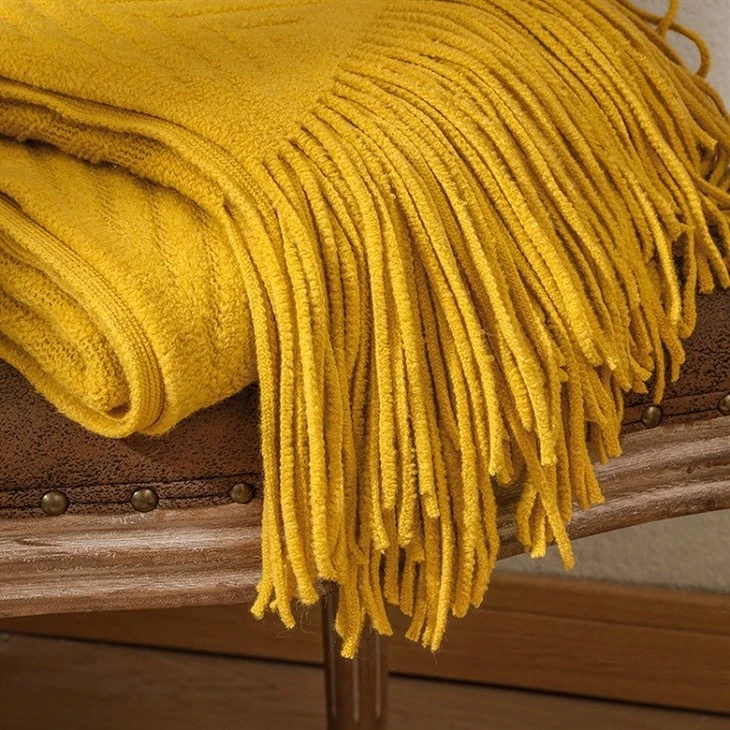
In contrast, a loose - knit or open - work pattern has more space between the yarns. This allows dust to penetrate deeper into the fabric. Blankets with a lot of holes or a lacy pattern may accumulate dust more easily because there are more areas for dust to settle.
Environmental Factors
The environment in which the knitted throw is placed has a significant impact on dust attraction. In a dusty environment, such as a room near a construction site or a house with poor air filtration, the throw will attract more dust regardless of its material or pattern. High - traffic areas also tend to have more dust in the air due to people moving around and disturbing dust on the floor.
Managing Dust on Knitted Throws
Regular Cleaning
Regular cleaning is essential to keep knitted throws looking clean and fresh. For light dusting, you can use a soft - bristled brush to gently remove the surface dust. A vacuum cleaner with a soft brush attachment can also be effective. Make sure to use a low - suction setting to avoid damaging the fabric.
For a more thorough clean, follow the care instructions on the throw. Some knitted throws can be machine - washed on a gentle cycle, while others may require hand - washing. For example, our Yellow Knitted Herringbone Throw Blanket can be machine - washed on a delicate cycle to remove deeper - seated dust.
Storage
Proper storage can also help reduce dust accumulation. When not in use, store the knitted throw in a clean, dry place. You can use a storage container or a fabric bag to protect it from dust. Avoid storing it in a damp area, as this can lead to mold growth, which is an even bigger problem.
Air Quality Improvement
Improving the air quality in the room where the throw is placed can significantly reduce dust attraction. Use air purifiers to filter out dust particles from the air. Keep windows closed during high - dust days, such as days with a lot of pollen or construction work nearby.
Our Knitted Throws and Dust Management
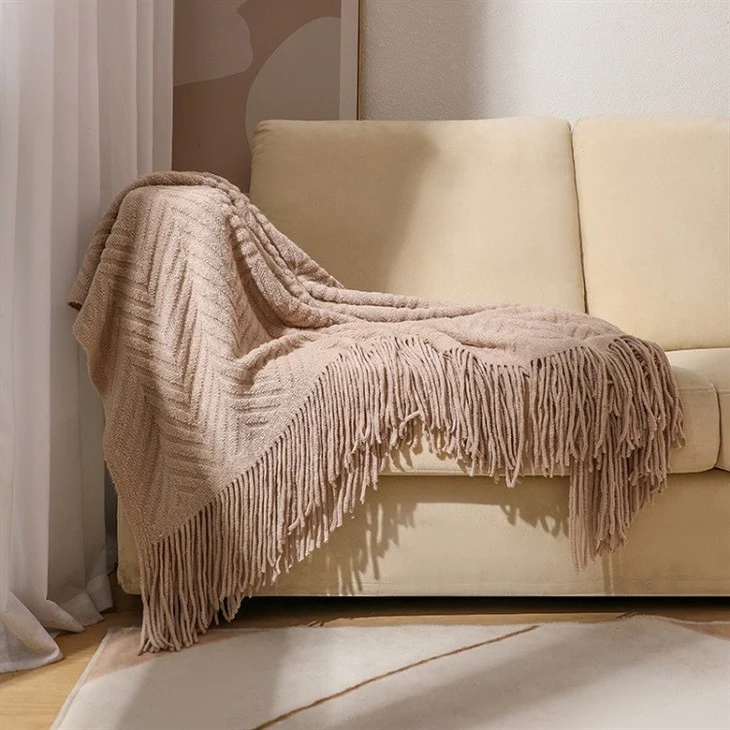
At our company, we are committed to providing high - quality knitted throws that not only look beautiful but also are easy to maintain. Our Camel Knit Throw Blanket with Tassels is made with high - quality yarns and well - thought - out knitting patterns to minimize dust attraction.
We also provide detailed care instructions with each of our throws to help our customers keep them clean. Our team of experts is always available to answer any questions you may have about dust management and the care of our knitted throws.
Conclusion
While knitted throws do have the potential to attract dust due to their structure and the type of yarn used, there are many ways to manage this issue. By choosing the right material, pattern, and taking proper care of the throw, you can keep it looking clean and beautiful for a long time.

If you are interested in purchasing our knitted throws, we welcome you to contact us for more information and to discuss your specific needs. Our team is ready to assist you in finding the perfect knitted throw for your home or as a gift. We look forward to the opportunity to work with you and provide you with the highest - quality knitted throws on the market.
References
- Textile Science and Technology textbooks
- Industry research on knitted fabric properties
- Internal product testing and analysis reports